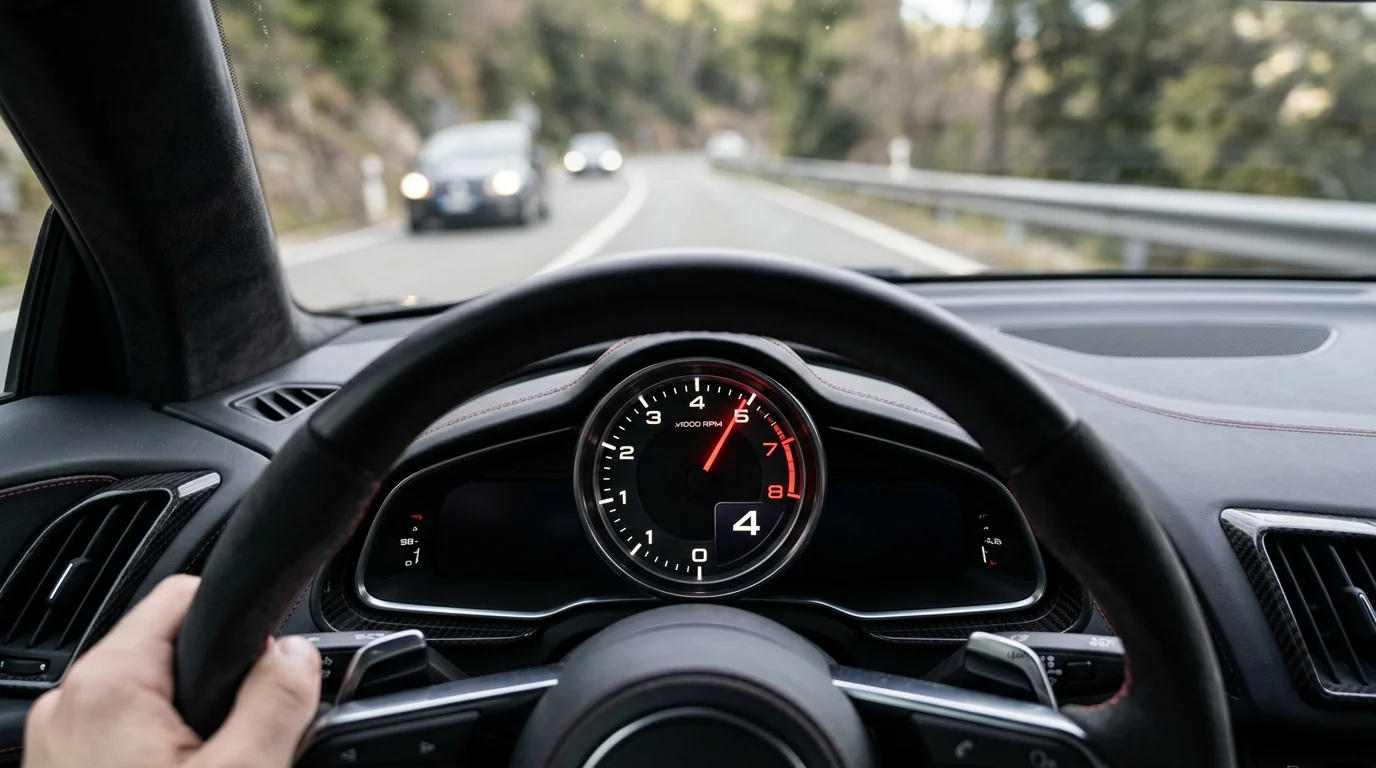
An RPM calculator estimates how fast an engine turns at a given road speed by combining tire size with the ratios in the drivetrain. For speed in mph and tire diameter in inches, a useful formula is engine RPM ≈ mph × transmission ratio × axle ratio × 336 ÷ tire diameter.
This makes it possible to estimate highway cruising RPM or compare a proposed tire or gearing change before buying parts. You need the ratio of the selected transmission gear, not simply the number of forward gears the vehicle has.
The result also assumes a connected drivetrain without meaningful slip. An unlocked automatic transmission or inaccurate tire dimension can make the dashboard show something different. The examples below explain the calculation from wheel rotation onward, then show how to use the answer without treating an estimate as a measured operating condition.
Quick Answer: Calculate Rotation at a Known Road Speed
Calculate engine RPM by finding wheel revolutions per minute and multiplying by the total drivetrain reduction. With mph and tire diameter in inches, use RPM ≈ mph × transmission ratio × final-drive ratio × 336 ÷ diameter. Include any additional reduction stage. This estimate assumes rolling tires and negligible drivetrain slip.
Engine RPM and Wheel RPM Describe Different Shafts
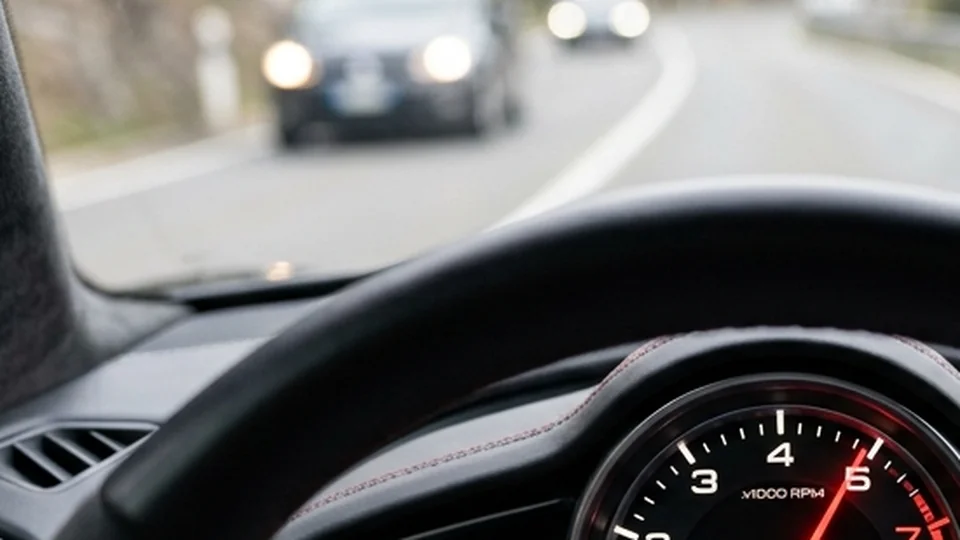
RPM stands for revolutions per minute. A tachometer reading of 2,000 RPM means the engine’s crankshaft completes approximately 2,000 rotations each minute. It does not mean the wheels turn at that speed.
Between the crankshaft and driven wheels, transmission gears and the final drive change rotational speed. In a conventional reduction ratio of 3.55:1, the input makes 3.55 turns for each output turn.
Multiply the relevant ratios to obtain the overall reduction. A selected transmission gear of 0.75:1 and an axle ratio of 3.55:1 produce:
Overall reduction = 0.75 × 3.55 = 2.6625
The engine therefore makes 2.6625 rotations for every rotation of the driven wheels under the assumed conditions. The transmission’s 0.75 ratio is an overdrive ratio: its output rotates faster than its input. The downstream axle reduction still makes wheel speed lower than engine speed.
Vehicle speed enters the calculation through the tires. Every complete wheel turn moves the vehicle approximately one rolling circumference along the road, provided the tire is not slipping.
Gather the Inputs for an RPM Calculator
Start with the vehicle’s actual configuration. Transmission variants can use different internal ratios, and a previous axle replacement can make original records inaccurate.
| Required input | What to record |
|---|---|
| Road speed | The intended speed and its unit, mph or km/h |
| Selected gear | Its numerical transmission gear ratio |
| Final drive | Axle or differential ratio for the vehicle |
| Tire dimension | Overall diameter or documented rolling data |
| Additional gearing | Transfer-case or other reduction, if applicable |
Check transmission specifications for the particular model and version. “Six-speed” identifies the number of gears, not the top-gear ratio. Likewise, “four-wheel drive” does not tell you the transfer-case reduction currently selected.
If a calculator requests an overall ratio in one field, multiply the stages before entering the value. If it has separate transmission and axle fields, enter each component once. Supplying an already combined value and then multiplying by the axle again would count that stage twice.
Keep the source of each input beside the number. This makes a surprising result easier to investigate and prevents a guessed gear ratio from becoming an assumed fact in later comparisons.
Work Through a 65 MPH Example
Assume a fictional vehicle cruises at 65 mph with a 28-inch tire diameter, a 0.75 transmission ratio, and a 3.55 final-drive ratio. Assume no extra reduction and no relevant slip.
First calculate the tire’s ideal circumference:
Circumference = π × 28 ≈ 87.965 inches
A mile contains 63,360 inches, and an hour contains 60 minutes. Therefore, 65 mph corresponds to:
65 × 63,360 ÷ 60 = 68,640 inches per minute
Divide the distance traveled each minute by the distance covered in one tire revolution:
Wheel RPM = 68,640 ÷ 87.965 ≈ 780.3
Finally, apply the overall reduction:
Engine RPM = 780.3 × 0.75 × 3.55 ≈ 2,078 RPM
The familiar constant 336 compresses these circumference and time conversions into a shorter expression. More precisely, 63,360 ÷ (60 × π) is approximately 336.135.
Using the rounded shortcut gives:
65 × 0.75 × 3.55 × 336 ÷ 28 ≈ 2,077 RPM
The difference is less than one RPM before final rounding. That is usually much smaller than the uncertainty introduced by the tire’s effective rolling size or the accuracy of a dashboard gauge.
Use the Metric Formula or Tire Revolution Data
For speed in kilometers per hour and tire diameter in meters, calculate:
Engine RPM = speed × 1,000 × overall reduction ÷ (60 × π × diameter)
Here, 1,000 converts kilometers to meters, while 60 converts hours to minutes. Keeping the tire dimension in meters lets the distance units cancel correctly.
For a fictional 100 km/h cruise with a 0.7112 m tire diameter and a 2.6625 overall reduction:
100 × 1,000 × 2.6625 ÷ (60 × π × 0.7112) ≈ 1,986 RPM
Alternatively, use a tire specification expressed as revolutions per mile. If the tire makes N revolutions per mile:
Engine RPM = mph × N × overall reduction ÷ 60
For example, a hypothetical tire specification of 730 revolutions per mile, 60 mph, and an overall ratio of 3.00 gives 2,190 engine RPM. At 60 mph, the vehicle travels one mile each minute, so the wheel turns 730 times per minute.
This approach uses the supplied rolling data directly. Verify that the specification belongs to the exact tire size and model, and observe any stated test conditions.
Find Tire Diameter Without Confusing It With Wheel Size
The rim diameter is only part of the assembled tire’s height. Entering 17 inches for a tire mounted on a 17-inch wheel omits both sidewalls and produces an excessively high RPM estimate.
For a metric tire size such as 225/65R17:
- 225 is the nominal section width in millimeters.
- 65 is the sidewall height as a percentage of that width.
- 17 is the rim diameter in inches.
An approximate overall diameter is:
Diameter in inches = rim diameter + 2 × width × aspect ratio ÷ 25.4
Enter the aspect ratio as a decimal, so 65% becomes 0.65:
17 + 2 × 225 × 0.65 ÷ 25.4 ≈ 28.52 inches
This is a nominal geometric estimate. A pneumatic tire deforms under load, so its rolling circumference is not perfectly represented by an unloaded circular outline. Published rolling information can therefore improve a road-speed estimate where available.
Do not assume that a larger wheel automatically creates a taller tire assembly. A lower-profile tire can keep overall height similar despite an increase in rim diameter. For RPM calculations, the distance traveled per complete tire rotation is what matters.
Compare Axle, Tire, and Overdrive Changes
Return to the fictional 65 mph example. Change one input at a time while holding road speed and all other assumptions constant.
| Configuration | Transmission ratio | Axle ratio | Tire diameter | Estimated engine RPM |
|---|---|---|---|---|
| Original setup | 0.75 | 3.55 | 28 in | 2,078 |
| Numerically higher axle ratio | 0.75 | 4.10 | 28 in | 2,399 |
| Taller tire | 0.75 | 3.55 | 30 in | 1,939 |
| Lower top-gear ratio | 0.63 | 3.55 | 28 in | 1,745 |
Values use the circumference formula and are rounded to whole RPM. The 4.10 axle raises the estimated cruising speed of the engine by about 15.5%. The 30-inch tire lowers it by about 6.7%, and the 0.63 overdrive lowers it by 16%.
The directions follow directly from the formula. A larger numerical reduction increases engine rotations per wheel turn. A larger tire covers more distance per revolution, reducing the wheel rotations needed at the same road speed.
Lower RPM alone does not establish better fuel economy or a better driving setup. The vehicle still needs sufficient usable output for the load and road conditions. An unsuitable ratio can lead to more frequent downshifts.
Tire changes also require checks beyond rotational speed, including clearance and appropriate fitment. Use the calculation to quantify the gearing effect, then assess the proposed change against the vehicle’s requirements.
Estimate RPM After a Shift or Rearrange for Road Speed
At nearly unchanged vehicle speed, a shift changes engine speed in proportion to the transmission ratios. The axle and tire terms cancel because they remain the same.
RPM after shift = RPM before shift × new gear ratio ÷ old gear ratio
For a hypothetical shift from 1.30:1 to 1.00:1 at 3,000 RPM:
3,000 × 1.00 ÷ 1.30 ≈ 2,308 RPM
This estimates the engine speed after engagement, assuming the vehicle has not appreciably accelerated or slowed during the shift. It does not specify the best shift point for that engine.
You can also rearrange the main equation to find road speed:
mph ≈ engine RPM × tire diameter ÷ (336.135 × overall reduction)
This calculates the speed associated with a selected engine RPM and gearing. A result obtained at redline is a gearing-based speed, not a guaranteed attainable top speed. Engine output, resistance, electronic limits, and operating conditions may prevent the vehicle from reaching it.
Use manufacturer operating limits when assessing a proposed gear choice. A calculation should never be treated as permission to exceed an engine or tire rating.
Explain a Difference Between the Estimate and Tachometer
If calculated RPM and dashboard RPM disagree, check the assumed gear first. An automatic may select another ratio as load or speed changes, and the transmission may not remain in its highest gear.
The torque converter is another possible cause. When an automatic’s converter is not locked, the fluid coupling allows slip between the engine and transmission input. The fixed-ratio calculation assumes that such a speed difference is absent or negligible.
Other checks include tire rolling data, an incorrect axle specification, speedometer calibration, and the precision of the tachometer reading. A tire change can affect the relationship between indicated speed and actual road speed if calibration is unchanged.
Gather comparisons only under safe, steady conditions. A passenger or suitable recorded data can help avoid distracting the driver. Note the selected gear and converter state if that information is available.
A discrepancy does not identify a mechanical fault by itself. Confirm inputs and operating conditions before attributing the difference to clutch slip, converter behavior, or a sensor problem. If observed behavior is abnormal, use an appropriate diagnostic process rather than adjusting the calculator until it matches.
Common Questions About Vehicle RPM
Can road speed alone tell me engine RPM?
No. The same road speed can correspond to different engine speeds depending on tire rolling size, final drive, and selected transmission gear. A vehicle may also change gears while maintaining speed. You need the relevant drivetrain ratios and tire information to connect road motion with crankshaft rotation through this calculation.
Does vehicle weight belong in the formula?
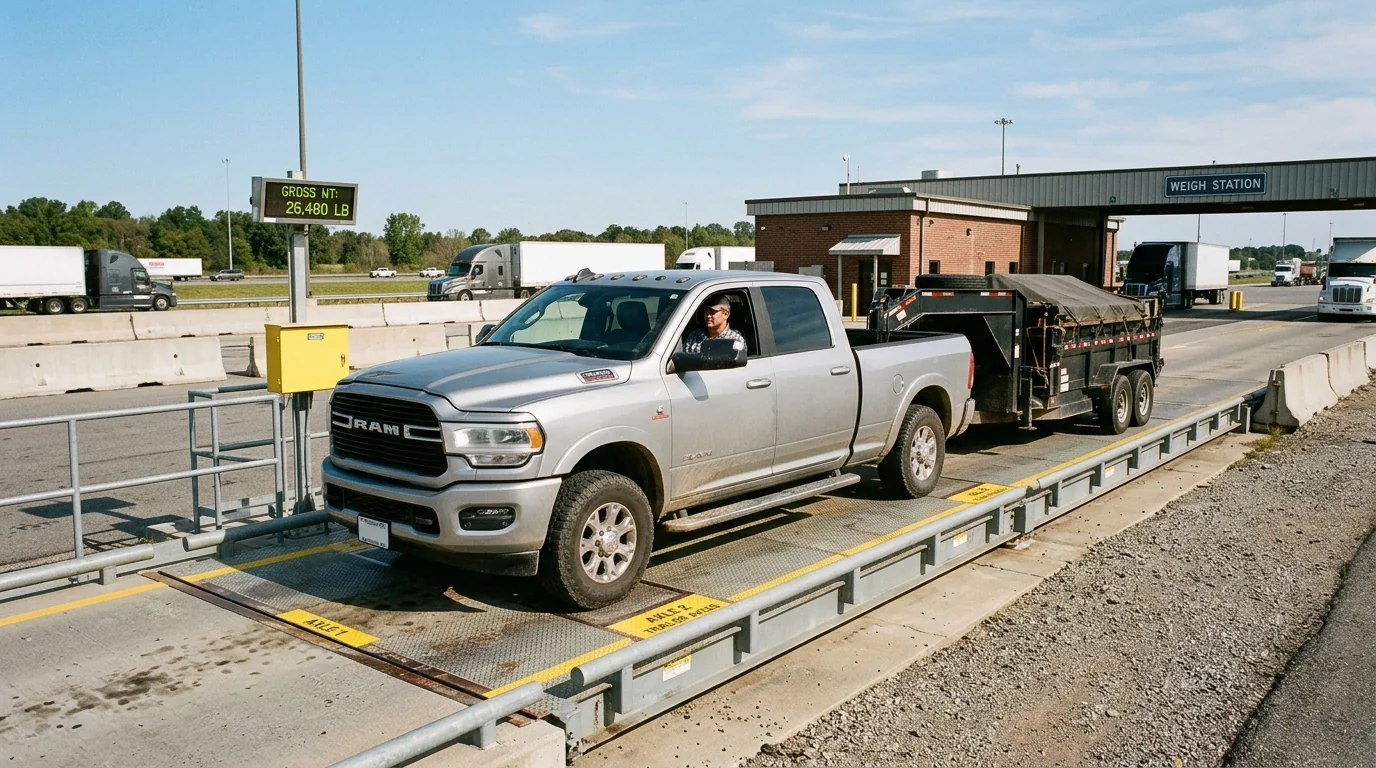
Weight does not appear in this rotational relationship. With the same gearing, rolling circumference, road speed, and negligible slip, the calculated engine RPM is unchanged. A heavier load can indirectly change actual RPM if the transmission downshifts or converter operation changes. It also affects the effort required to maintain that road speed.
Can this method work for a motorcycle?
Yes, provided you include every relevant reduction stage. A motorcycle may have a primary-drive ratio as well as its selected gearbox ratio and final chain, belt, or shaft reduction. Using only the gearbox and rear sprocket information can omit part of the relationship. Use the manufacturer’s specifications for the particular drivetrain.
What happens with a continuously variable transmission?
A CVT can change its operating ratio instead of selecting from a fixed set of gear ratios. You would need the ratio being used at that moment for a corresponding calculation. A single assumed ratio cannot reliably describe all driving conditions, even if road speed and tire size remain unchanged.
Why does the formula show zero RPM when the car stops?
The road-speed method describes a connected rotational relationship. At a stop, an idling engine may be disconnected from the wheels by a released clutch, neutral selection, or converter slip. Those conditions fall outside the no-slip assumption, so the formula does not predict idle speed from zero road speed.
Can I find the axle ratio from known RPM and speed?
You can estimate it by rearranging the equation, provided the transmission ratio, rolling tire size, and actual speed are known. Converter slip or uncertain inputs can distort that estimate. Treat it as a plausibility check and confirm the installed ratio through reliable vehicle records or an appropriate mechanical inspection.
Build the Estimate Around the Actual Drivetrain
An RPM calculator gives a useful forecast when the selected gear, axle ratio, tire data, and speed units are correct. Keep those inputs with the result and compare changes one at a time. For a dashboard check, account for transmission operation and tire calibration before deciding whether the observed RPM is unexpected.