
A power to weight ratio calculator divides a vehicle’s power by its mass to show how much output is available for each pound or kilogram. That gives you a more useful starting point for comparing performance than horsepower alone. A powerful vehicle may also carry enough extra weight to cancel out much of its advantage.
The calculation is simple, but the inputs deserve attention. You need compatible units, a clear definition of vehicle weight, and power figures measured on the same basis. Otherwise, two accurate calculations can still produce an unfair comparison.
This guide explains the ratios you will see, works through practical examples, and shows how passengers or modifications change the result. You will also learn where the numbers stop being reliable predictors, especially when traction, gearing, and aerodynamics influence how quickly a vehicle actually gains speed.
Quick Answer
To calculate a vehicle’s power-to-weight ratio, divide its power by its mass. A 240 hp car weighing 1,600 kg has 0.150 hp/kg, equivalent to 150 hp per metric tonne. Higher values indicate more power for the same mass, but they do not guarantee a particular acceleration time.
What the Ratio Measures
The vehicle power to weight ratio describes how much engine or motor output is available to move each unit of mass. In vehicle discussions, “weight” usually means the mass recorded in kilograms or pounds, rather than gravitational force measured in newtons.
A value of 0.150 hp/kg means the vehicle has 0.150 horsepower available per kilogram. It does not mean that power is permanently assigned to individual parts of the car.
There is also an inverse measurement: weight-to-power ratio. This divides mass by power and produces values such as lb/hp or kg/hp.
- For hp/lb and hp/kg, higher values mean more power relative to mass.
- For lb/hp and kg/hp, lower values mean less mass for each horsepower to move.
The labels matter. A figure of 12 lb/hp cannot be compared directly with 0.10 hp/lb until one is converted to the other format.
Using the Power to Weight Ratio Calculator
Before entering anything, find the power specification and weight for the exact vehicle version you want to assess. Check the model year, engine, transmission, and drivetrain. A specification for another trim can change the result.
- Enter the rated output in the Engine Power field.
- Select the matching power unit, such as hp or kW.
- Enter the vehicle’s mass in the Vehicle Weight field.
- Select kilograms, pounds, or another supported mass unit.
- Read the calculated ratios and use one consistent unit for your comparison.
The calculator displays horsepower per pound, kilowatts per kilogram, and horsepower per kilogram. To express its hp/kg result as horsepower per metric tonne, multiply by 1,000.
Record the inputs alongside the answer. A saved result labeled “driver included, half tank, engine-rated hp” is more useful than an unexplained decimal when you return to compare another vehicle.
Calculate the Same Vehicle in Four Useful Units
The power to weight ratio formula is:
Ratio = P ÷ m
Here, P is the power output and m is vehicle mass. The units you enter determine the units of the answer.
For this worked example, assume a fictional car produces 240 mechanical hp and weighs 1,600 kg. All calculations below describe that same car; only the units change.
Horsepower per kilogram
Divide horsepower by kilograms:
240 hp ÷ 1,600 kg = 0.150 hp/kg
This format is convenient when a specification sheet lists engine power in horsepower and vehicle mass in kilograms.
Horsepower per metric tonne
A metric tonne contains 1,000 kg, so 1,600 kg equals 1.6 metric tonnes:
240 hp ÷ 1.6 metric tonnes = 150 hp per metric tonne
You can also multiply 0.150 hp/kg by 1,000. This produces a larger, easier-to-read number without changing the underlying relationship.
Horsepower per pound
One pound equals exactly 0.45359237 kg. The example vehicle therefore weighs approximately 3,527.40 lb:
240 hp ÷ 3,527.40 lb ≈ 0.0680 hp/lb
A horsepower per pound calculator performs this division automatically. If you want the inverse, divide 3,527.40 lb by 240 hp to get approximately 14.70 lb/hp.
Kilowatts per kilogram
Using approximately 0.7456999 kW per mechanical horsepower:
240 hp × 0.7456999 ≈ 178.968 kW
178.968 kW ÷ 1,600 kg ≈ 0.1119 kW/kg
Multiplying that result by 1,000 gives approximately 111.9 kW per tonne, where tonne means 1,000 kg. Keep extra digits during the calculation and round the final answer.
Resolve Unit Differences Before Comparing Results
An hp per ton calculator needs to know which ton you mean. A US short ton is 2,000 lb, equivalent to 907.18474 kg. A metric tonne is 1,000 kg. These denominators are different.
For the 240 hp, 1,600 kg example, the results are approximately:
| Mass convention | Vehicle mass in that unit | Calculated ratio |
|---|---|---|
| Metric tonne, 1,000 kg | 1.6000 metric tonnes | 150.0 hp per metric tonne |
| US short ton, 2,000 lb | 1.7637 US short tons | 136.1 hp per US short ton |
Neither calculation changes the vehicle’s performance. The smaller numerical result comes from the unit choice.
Horsepower also has more than one definition. Mechanical horsepower is approximately 745.7 watts, while metric horsepower, commonly labeled PS, is approximately 735.5 watts. Select the appropriate unit when your source distinguishes them.
Keep the original labels beside any figures you collect. Writing “240 PS” instead of simply “240 horsepower” preserves information you will need for an accurate conversion.
Choose Weight and Power Figures That Match
Curb weight versus the vehicle you drive
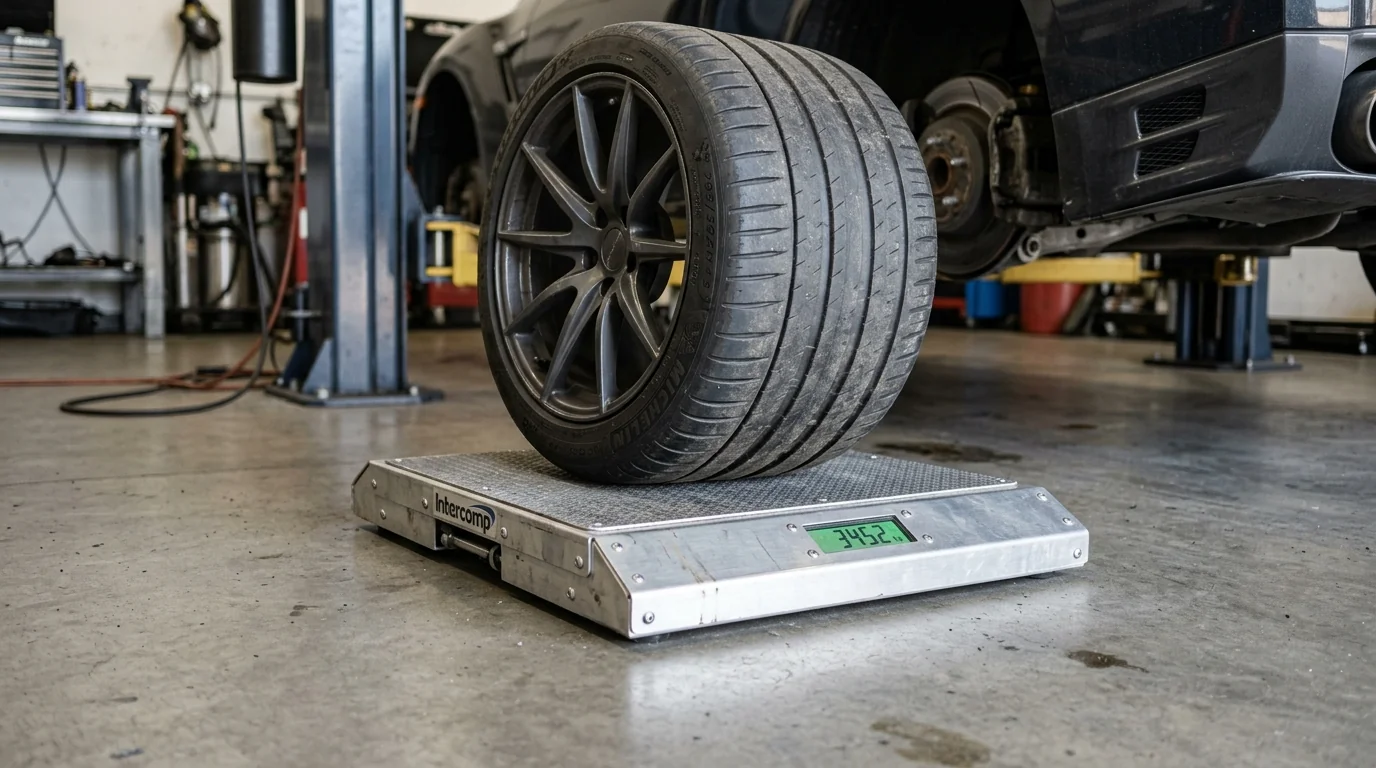
Under common US usage, curb weight includes operating fluids and fuel but excludes occupants and cargo. Definitions can differ between specification sources, so check what is included before adding anything.
For a comparison of factory specifications, use curb weight for both vehicles. For your own driving setup, include the driver, passengers, luggage, and fitted equipment. Avoid adding a full tank again if the listed figure already includes one.
Gross vehicle weight rating, or GVWR, is a maximum permitted loaded weight, not the vehicle’s current scale weight. Entering GVWR for an empty truck would describe a hypothetical loaded condition.
If modifications have changed the vehicle substantially, a measured weight is more useful than the original brochure figure. Record its fuel and passenger load at the time of weighing.
Engine output versus wheel horsepower
Engine-rated horsepower and wheel horsepower describe output at different points. Wheel horsepower comes from testing through the drivetrain, commonly using a chassis dynamometer. Drivetrain loss means these figures should not be treated as interchangeable.
Compare engine-rated output with engine-rated output, or wheel measurements obtained on a comparable basis. Do not apply a universal loss percentage and present the converted number as a measured result.
The same care applies to peak versus continuous power. Use matching definitions, particularly when comparing vehicles whose specifications list several output ratings.
Compare Vehicles Without Letting Horsepower Mislead You
Consider three fictional vehicles. Their power figures all use mechanical horsepower, and their listed masses represent the same agreed comparison condition.
| Vehicle | Power | Mass | hp/kg | hp per metric tonne |
|---|---|---|---|---|
| Lightweight coupe | 225 hp | 1,250 kg | 0.180 | 180 |
| Performance sedan | 320 hp | 1,600 kg | 0.200 | 200 |
| Large SUV | 390 hp | 2,300 kg | 0.170 | 169.6 |
The SUV has the most horsepower but the lowest ratio in this group. The sedan has about 11.1% more power per kilogram than the coupe:
(0.200 ÷ 0.180 − 1) × 100 ≈ 11.1%
That is an 11.1% advantage in the ratio, not a promise of an 11.1% shorter acceleration time.
A useful comparison also checks how close the figures are. If two vehicles differ by only a small amount, uncertain weight estimates or incompatible power ratings may be enough to reverse their order.
For a buying shortlist, put the year and trim beside each result. Separate standard specifications from optional performance packages, and note whether the numbers came from a manufacturer or a test report. That small amount of record keeping makes it easier to spot a mismatched entry. If a source lists a weight range, calculate both ends instead of choosing whichever value makes a vehicle look better. The resulting range communicates the uncertainty more honestly than a single precise-looking number.
For example, 250 hp divided by an estimated 1,500 kg gives 0.1667 hp/kg. If the actual mass is 1,575 kg, the answer falls to 0.1587 hp/kg. That is roughly 4.8% lower without any change in engine output. Treat a narrow numerical lead cautiously when the inputs are approximate.
What Passengers and Modifications Change
Extra mass lowers the ratio even when power stays constant. Suppose a fictional car produces 260 hp and weighs 1,400 kg before adding its driver and luggage.
Its starting ratio is:
260 ÷ 1,400 ≈ 0.1857 hp/kg
Adding 100 kg produces:
260 ÷ 1,500 ≈ 0.1733 hp/kg
The added load reduces the ratio by approximately 6.7%. This shows why comparisons should include similar passenger and cargo assumptions.
Now consider a different change: reducing the original 1,400 kg vehicle’s mass by 10%, while retaining 260 hp. At 1,260 kg, its ratio becomes approximately 0.2063 hp/kg, an 11.1% increase over the original.
Reducing mass by 10% improves the ratio by more than 10% because the denominator becomes smaller. Increasing power by 10%, with mass unchanged, improves the ratio by exactly 10%.
Use these calculations to compare proposed changes, including any mass added by new components. Keep required safety equipment in place. A better ratio alone does not establish that a modification improves the whole vehicle.
Why the Ratio Cannot Predict Every Performance Result
Peak power and vehicle mass are only two parts of acceleration. The tires must transfer force to the road, and the drivetrain must deliver useful output at the vehicle’s current speed.
Traction can limit a launch before the engine reaches its full potential. Gear ratios, shift timing, and the shape of the power curve affect how much power is available during an acceleration run. A quoted peak figure does not describe output at every engine speed.
Aerodynamic drag also rises strongly with speed. Two vehicles with similar ratios may need different amounts of power to push through the air because their shapes and frontal areas differ.
These effects explain why the ratio alone cannot provide a dependable 0–60 mph time, passing time, or top speed. It can identify a promising comparison, but measured results under comparable conditions answer those more specific questions.
The ratio does not measure braking, cornering, ride quality, or carrying capacity either. Choose it when your question concerns available power relative to mass, then use the relevant additional measures for the decision you are making.
Frequently Asked Questions
What is a good power-to-weight ratio for a car?
There is no universal cutoff for a good result. Compare vehicles intended for a similar purpose using the same units and weight assumptions. A family vehicle, lightweight sports car, and loaded pickup serve different needs. The ratio helps explain their performance potential, while measured acceleration and everyday usability help establish whether that performance suits you.
How do I calculate how much power I need for a target ratio?
Multiply your target ratio by the mass you expect to move. For a fictional 1,450 kg car targeting 0.200 hp/kg, required power is 1,450 × 0.200 = 290 hp. Keep the power basis consistent: an engine-rated target requires engine-rated output. This calculation sets a numerical goal, not a guarantee that a proposed modification will deliver it.
Can I use the calculation for a motorcycle?
Yes. Divide motorcycle power by the mass included in your comparison. For a riding scenario, include the rider and equipment as well as the bike’s appropriate operating weight. Because the rider can represent a substantial share of the combined mass, comparing an unladen bike with a car that includes its driver creates an uneven comparison.
Does the same formula work for electric vehicles?
Yes. Divide the vehicle’s stated propulsion power by its mass using matching units. Use the manufacturer’s combined system output where available, rather than assuming separately listed motor peaks can simply be added. Check whether the figure describes peak or continuous output, and avoid comparing those two types of ratings as though they mean the same thing.
Can torque replace horsepower in the formula?
Dividing torque by mass produces a different measure, such as newton-meters per kilogram. It is not a direct substitute for power-to-weight ratio. Power depends on torque and rotational speed together, while gearing changes the torque delivered to the wheels. For a power comparison, obtain the horsepower or kilowatt figure rather than entering engine torque in its place.
Why do two calculators give different answers?
First check whether both answers use identical units. Then inspect mechanical versus metric horsepower, metric tonnes versus US short tons, and whether the result is power divided by weight or its inverse. If all definitions match, displayed rounding may explain a small difference. Larger discrepancies call for checking the entered values and each tool’s conversion method.
Make the Comparison Useful
A power to weight ratio calculator works best with clearly labeled inputs. Confirm the vehicle version, select the correct units, and compare equivalent power and weight conditions. Keep those assumptions beside the result. You can then use the ratio to understand differences between vehicles or proposed changes, and consult measured performance when you need an answer about actual speed or acceleration.