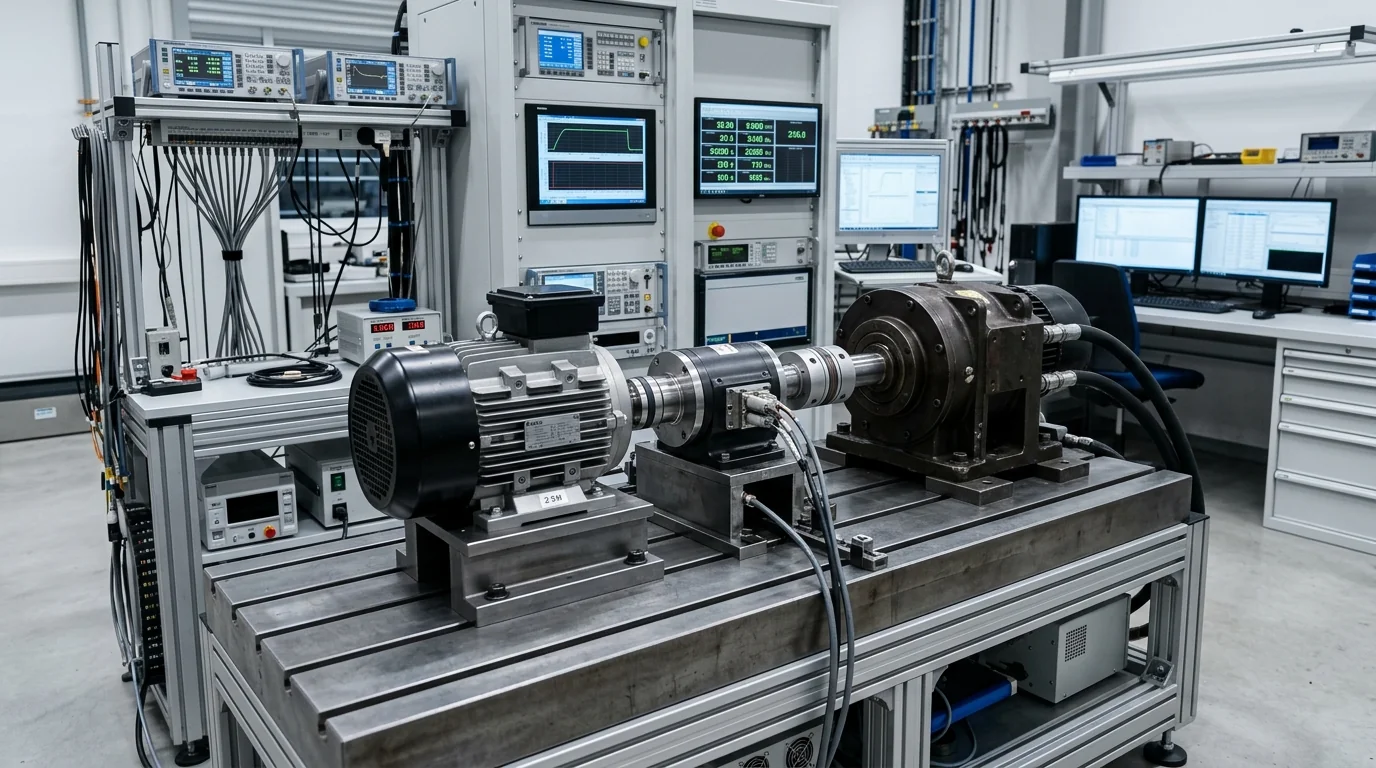
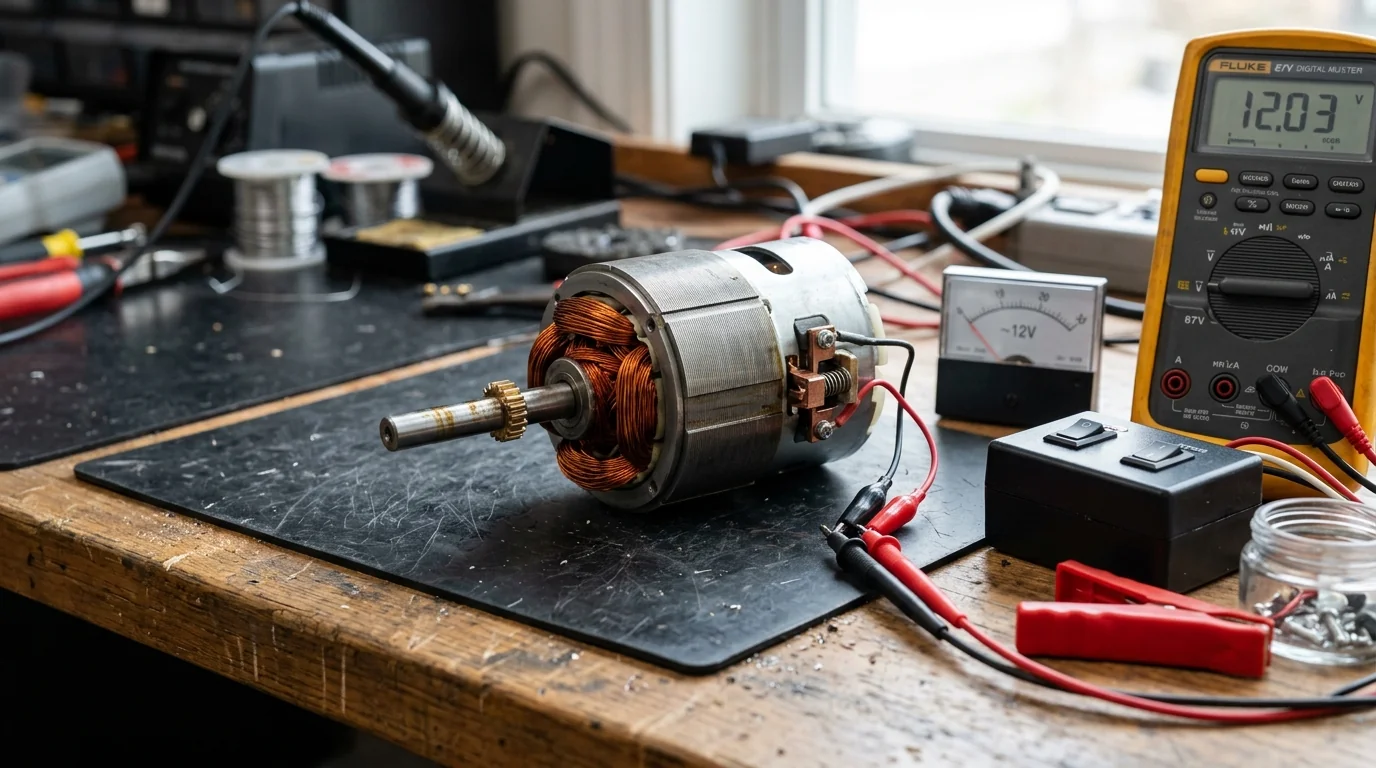
Converting 45 watts to hp gives approximately 0.060346 mechanical horsepower, usually written as 0.0603 hp. Divide 45 by 745.6999 to calculate it. This is a small fraction of one horsepower, slightly below the power represented by a 1/16 hp rating.
That answer can help you interpret a small motor specification or compare a watt-based rating with a catalog that uses horsepower. However, the number on a label needs context. A 45 W motor output rating, a 45 W electrical input rating, and a 45 W adapter capacity describe different things even though they share the same unit.
Below, you will find the calculation, useful rounding choices, and comparisons with nearby fractional ratings. You will also see how to read the original specification before using the converted figure to judge a replacement part or complete a technical worksheet.
Quick Result for 45 W
45 W equals about 0.060346 mechanical hp, or 6.0346% of one mechanical horsepower. For a short answer, use 0.0603 hp. If the required unit is explicitly electrical horsepower, the result is approximately 0.060322 hp; in metric horsepower, it is approximately 0.061183 PS. Keep the selected horsepower definition with your answer.
Calculate 45 Watts to HP Without Losing the Units
Begin with the conversion relationship for mechanical horsepower:
1 mechanical hp ≈ 745.6999 W
To express 45 watts in horsepower, divide the watt value by the watts represented by one horsepower:
45 W ÷ 745.6999 W/hp ≈ 0.06034599 hp
The watts cancel, leaving horsepower. This also explains why division is appropriate: 45 W is less than the wattage of one horsepower, so the answer should be less than one hp.
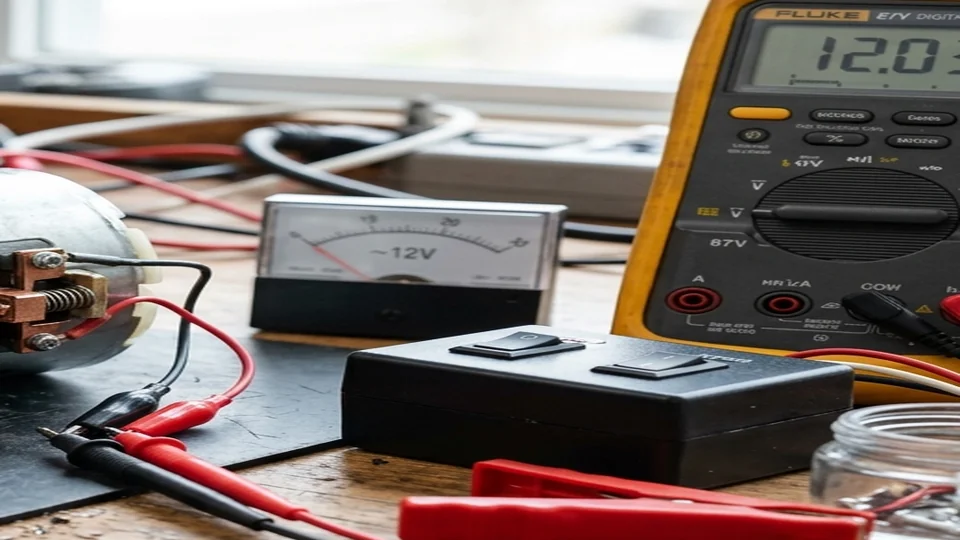
A basic calculator is enough. Enter 45, press divide, enter 745.6999, and calculate. If you use an online tool, select watts as the starting unit and mechanical horsepower as the destination.
For a worksheet, write the assumed horsepower definition before the arithmetic. Then keep the unrounded result until the final line. A reader can follow both the method and the reason for the displayed precision.
You can verify the result by multiplying approximately 0.06034599 hp by 745.6999 W/hp. The product returns approximately 45 W. Small differences in the final digits come from rounding the horsepower value before multiplying it back.
For a spreadsheet, place 45 in a cell labeled “Power, W.” If that value is in A2, the formula =A2/745.6999 calculates mechanical horsepower. Label the result column “Mechanical hp” rather than just “Result.” This lets you see the original input, the calculation, and the unit together.
Use cell formatting to control displayed decimal places instead of replacing the calculated result with a manually rounded number. If you later change the wattage, the conversion will update. Keep the conversion factor separate from any measured equipment data so that a change to a product rating cannot accidentally change the unit definition.
How Many Decimal Places Should You Keep?
Different displays can show the same conversion in ways that look inconsistent. The main issue is often how many digits they retain.
| Display choice | Mechanical horsepower result | Useful context |
|---|---|---|
| Six decimal places | 0.060346 hp | Checking a calculator result |
| Four decimal places | 0.0603 hp | A compact technical answer |
| Three decimal places | 0.060 hp | A short specification note |
| Two decimal places | 0.06 hp | A rough comparison |
Trailing zeros may communicate precision. A written value of 0.060 hp contains more significant figures than 0.06 hp, even though both have the same numerical value.
Do not mistake extra calculator digits for extra knowledge about the equipment. A label reading “45 W” may be a nominal rating rather than an exact measurement. If the source gives no tolerance, the conversion cannot establish one.
For perspective, imagine a measured power of 45 W with a stated uncertainty of ±1 W. The corresponding endpoints, 44 W and 46 W, are approximately 0.0590 hp and 0.0617 hp. That range would matter more than the sixth decimal place of the central conversion.
When carrying the number into another calculation, retain the original 45 W value or the unrounded horsepower result. Round only the answer you intend to display.
Why Some Calculators Return 0.0612 Instead
A result near 0.0612 may indicate that the calculator selected metric horsepower. It does not necessarily indicate faulty arithmetic.
For this specific input, the three relevant calculations are:
- Mechanical: 45 ÷ 745.6999 ≈ 0.060346 hp.
- Electrical: 45 ÷ 746 ≈ 0.060322 hp.
- Metric: 45 ÷ 735.4988 ≈ 0.061183 PS.
The mechanical and electrical answers differ by only about 0.000024 hp. The metric result is more visibly different because its unit represents a smaller amount of power.
Check the destination label before deciding which result to copy. If an assignment, equipment manual, or database explicitly requests PS, use the metric result. If it specifies electrical horsepower, use that convention. For an ordinary answer using mechanical horsepower, 0.0603 hp is appropriate.
The physical quantity remains 45 W in every case. Selecting another horsepower definition changes the numerical expression of that quantity, not the amount of power the device produces or receives.
Is 45 Watts Closer to 1/16 HP or 1/20 HP?
Small motors are sometimes described using fractional horsepower. These fractions can be easier to recognize than a decimal such as 0.060346, but they are not exact substitutes for it.
Using mechanical horsepower:
| Fractional rating | Decimal hp | Equivalent power |
|---|---|---|
| 1/25 hp | 0.0400 | 29.83 W |
| 1/20 hp | 0.0500 | 37.28 W |
| 1/16 hp | 0.0625 | 46.61 W |
| 1/15 hp | About 0.0667 | 49.71 W |
| 1/12 hp | About 0.0833 | 62.14 W |
At 45 W, the nearest of these values is 1/16 hp. Its equivalent power exceeds 45 W by about 1.61 W. Expressed relative to the 1/16 hp figure, 45 W is approximately 3.45% lower.
The difference from 1/20 hp is larger. A 1/20 hp output equals about 37.28 W, so 45 W is roughly 7.72 W higher, or approximately 20.69% above that reference.
For descriptive purposes, you could call 45 W “just under 1/16 mechanical hp.” For a specification field, keep the actual converted decimal instead of silently replacing it with the nearest fraction.
Closeness in rated power also does not prove that two motors can replace one another. The fraction is one comparison point; the electrical and mechanical requirements of the machine still need to match.
What a 45 W Label Actually Refers To
Before attaching the horsepower result to a product, read the words surrounding “45 W.” The same conversion can express several different quantities.
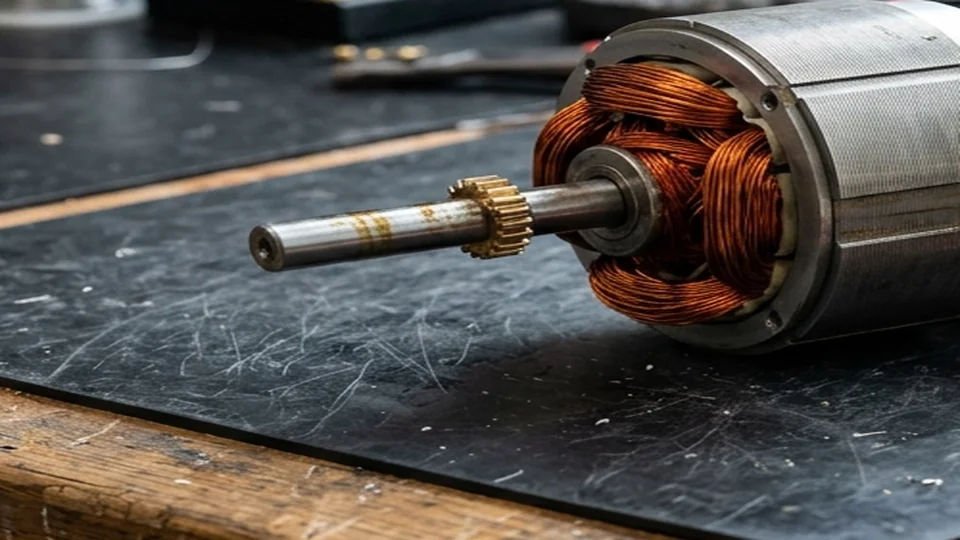
A 45 watt motor with specified shaft output
If the documentation explicitly states 45 W of rated mechanical output, approximately 0.0603 hp describes that output. Preserve any stated operating conditions and duty rating alongside it.
If the rating applies before a separate gearbox or transmission, it does not automatically describe the power available after that assembly. Identify which output point the manufacturer is specifying.
An appliance drawing 45 W
An electrical input of 45 W can be expressed in horsepower as a unit conversion, but it does not establish the appliance’s useful mechanical output. Electronics, heat, and other losses or functions may account for part of that input.
For a lamp or heater, horsepower may be mathematically valid yet less useful than the original watt rating. The converted number does not imply that the appliance contains a motor or offers a rotating shaft output.
An adapter marked 45 W
A power supply rating describes its specified output capability under the manufacturer’s conditions. It does not establish that the attached device always consumes that power or produces that much mechanical work.
Copying the adapter rating into a motor-output comparison would therefore answer the wrong question. Look for the connected device’s own documentation and distinguish its supply requirements from its useful output.
Comparing a 45 W Motor With a Replacement Listing
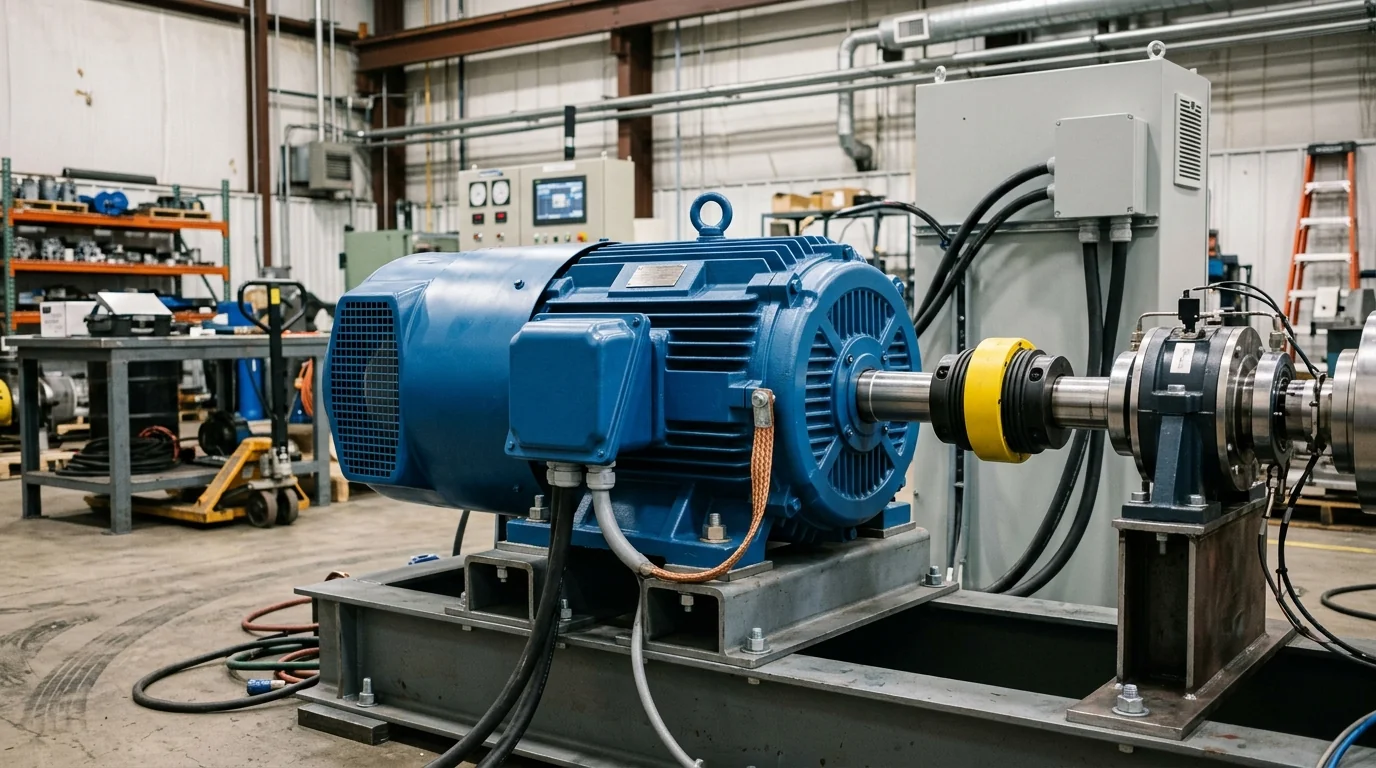
Suppose an existing assembly specifies a 45 W motor and a replacement listing advertises 1/16 hp. The arithmetic suggests similar power, but start by confirming that both values describe rated mechanical output on the same basis.
Next, check the manufacturer’s requirements for supply voltage, AC or DC operation, rated speed, and the load the motor must drive. Motor selection also depends on torque and, where relevant, the behavior of the load during starting and acceleration.
The physical connection matters as well. Shaft dimensions, mounting arrangement, and any required coupling must suit the assembly. A replacement that cannot connect correctly is not made suitable by a close horsepower number.
Check whether the listed motor is sold alone or as part of a geared unit. A gearbox changes the relationship between output speed and torque, so compare specifications at equivalent points in the assembly.
Finally, retain any duty or temperature conditions attached to the original rating. A short-duration figure should not be treated as a continuous operating capability without documentation.
If the listing does not provide those details, request the technical sheet or an approved replacement reference. Treat approximately 0.0603 hp as a way to interpret the power requirement, rather than as a complete part-selection rule.
Catch the Mistakes That Change the Answer Dramatically
Small power values are especially vulnerable to decimal errors. A misplaced zero can change the apparent rating by a factor of ten while still producing a plausible-looking motor specification.
Reading 45 W as 0.45 kW
The correct kilowatt equivalent is 0.045 kW. A value of 0.45 kW means 450 W, which is ten times the starting power. Check the prefix before comparing two calculator outputs.
Reversing the conversion direction
“45 hp to watts” begins with 45 horsepower and produces a much larger watt value. It is a different calculation from 45 W to hp. Always identify the starting unit rather than relying on the order of words in a search result.
Rounding to a whole horsepower
At zero decimal places, this conversion rounds to 0 hp. That does not mean the source power is zero. It means the chosen display is too coarse to represent a value this small. Use decimal horsepower for fractional ratings.
Entering a percentage as the horsepower value
The figure is about 6.03% of one mechanical horsepower, not 6.03 hp. Percent notation describes a proportion of the reference unit. Dropping the percent sign changes the meaning by a factor of one hundred.
For a final check, confirm that your result stays below 0.1 hp. That broad check will not catch every error, but it will expose several large mistakes before you copy the value elsewhere.
Questions About This Specific Conversion
Is 45 W exactly 0.06 hp?
No. Using mechanical horsepower, 45 W is approximately 0.060346 hp. The shorter value 0.06 hp is a rounded expression. Converting exactly 0.06 mechanical hp back into watts gives about 44.74 W. That difference is small, but it explains why a reverse calculation from the rounded answer does not return precisely 45.
Can I write the answer as 0.060 hp?
Yes, when three decimal places provide suitable precision for your purpose. It is the correctly rounded mechanical-horsepower result at that display setting. Keep more digits internally if you will use the value in further calculations. Also retain any stated tolerance from the original power specification rather than assuming the converted digits are all measured accurately.
Does 45 W become more horsepower if it runs longer?
No. A constant 45 W represents the same power regardless of operating duration. Running longer increases the energy transferred. For example, maintaining 45 W for two hours transfers 90 watt-hours of energy. Horsepower describes the rate of transfer, while watt-hours describe the accumulated amount over that period.
Can a 45 Wh battery be converted directly to hp?
No. A battery capacity of 45 Wh describes energy, so you need a discharge time to calculate average power. If 45 Wh were delivered evenly over three hours, the average would be 15 W. That is an idealized energy calculation, not a guarantee of battery runtime or the mechanical output of an attached device.
Do two 45 W devices equal 0.1207 hp?
If both simultaneously represent the same kind of power measurement, their total is 90 W, approximately 0.1207 mechanical hp. Two electrical inputs can be added as electrical input power. Two separate motor ratings, however, do not establish that a particular combined mechanism delivers the sum as useful output under all operating conditions.
Does the voltage affect the 45 W conversion?
No. Once the power is established as 45 W, the watt-to-horsepower conversion is independent of voltage. Voltage matters when determining current, supply compatibility, or power from electrical measurements. You cannot determine whether a motor suits a particular supply merely by converting its stated wattage into horsepower.
Record the Answer With the Right Label
For 45 watts to hp, use approximately 0.0603 mechanical horsepower unless your source specifies another horsepower convention. Keep the original 45 W figure beside it and note whether it describes input, output, or a rated capability. That short record preserves both the numerical answer and the information needed to use it correctly.