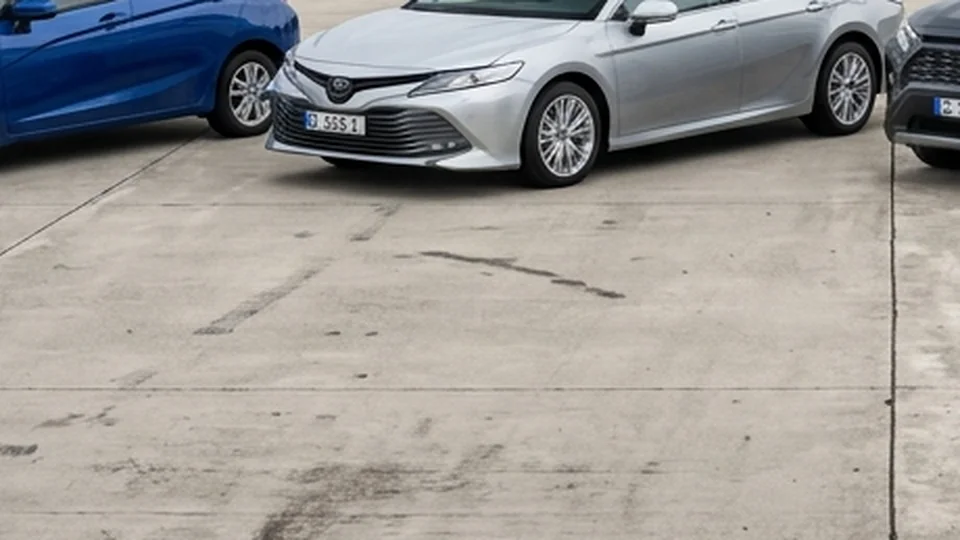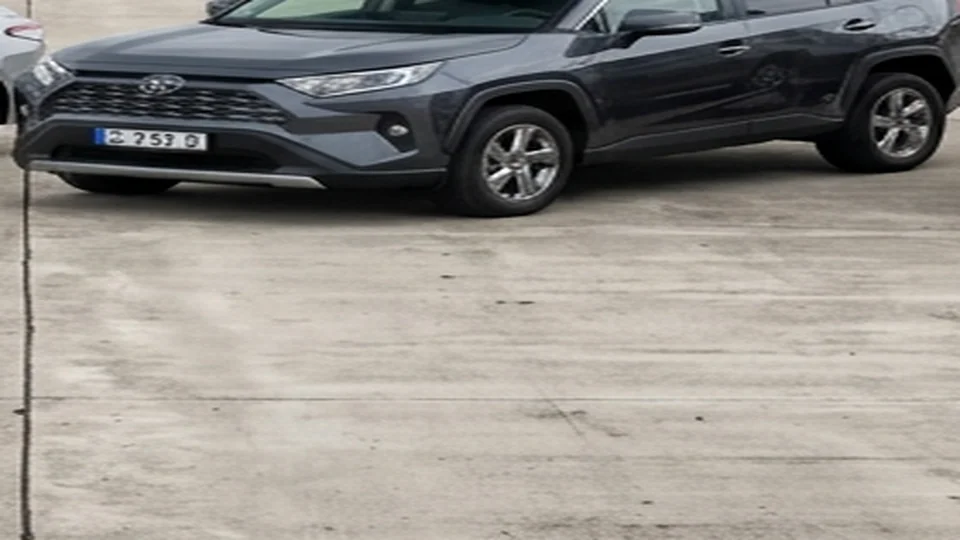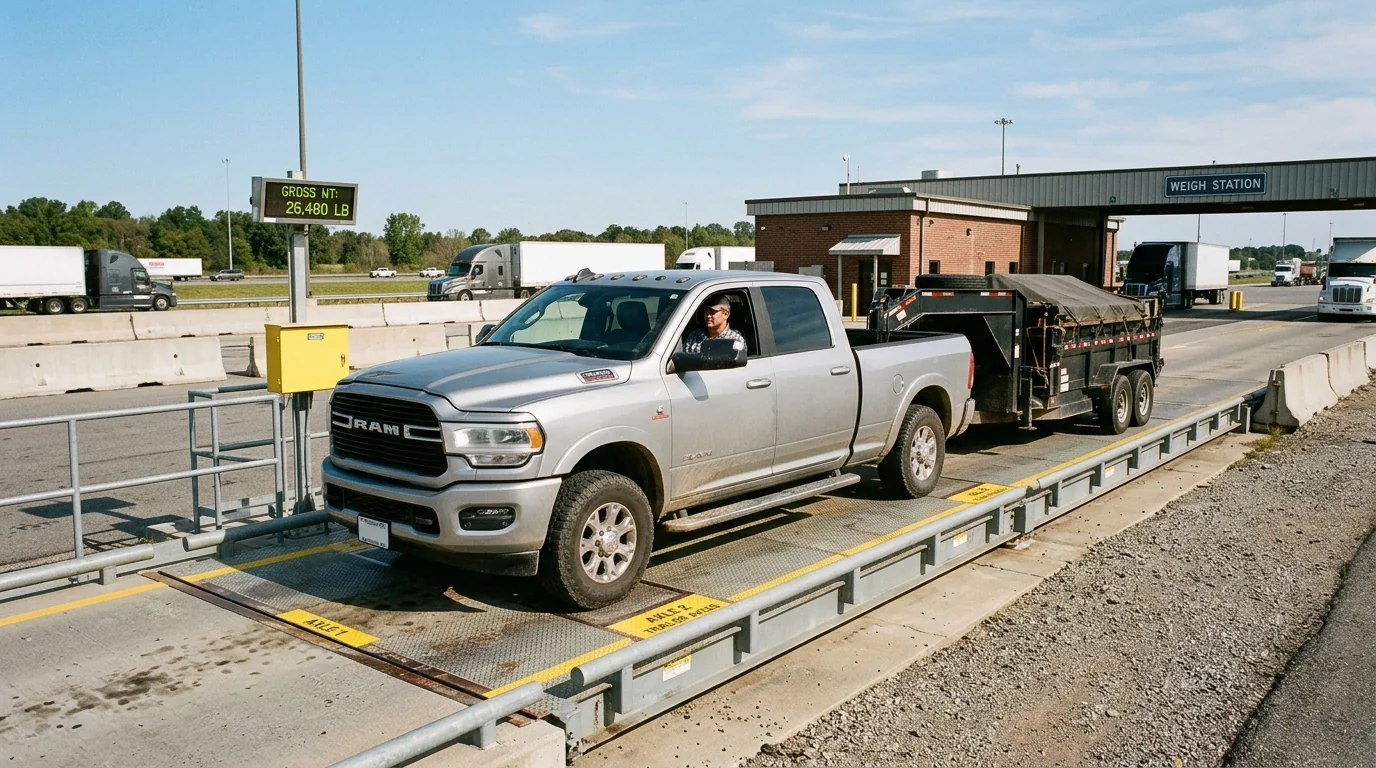
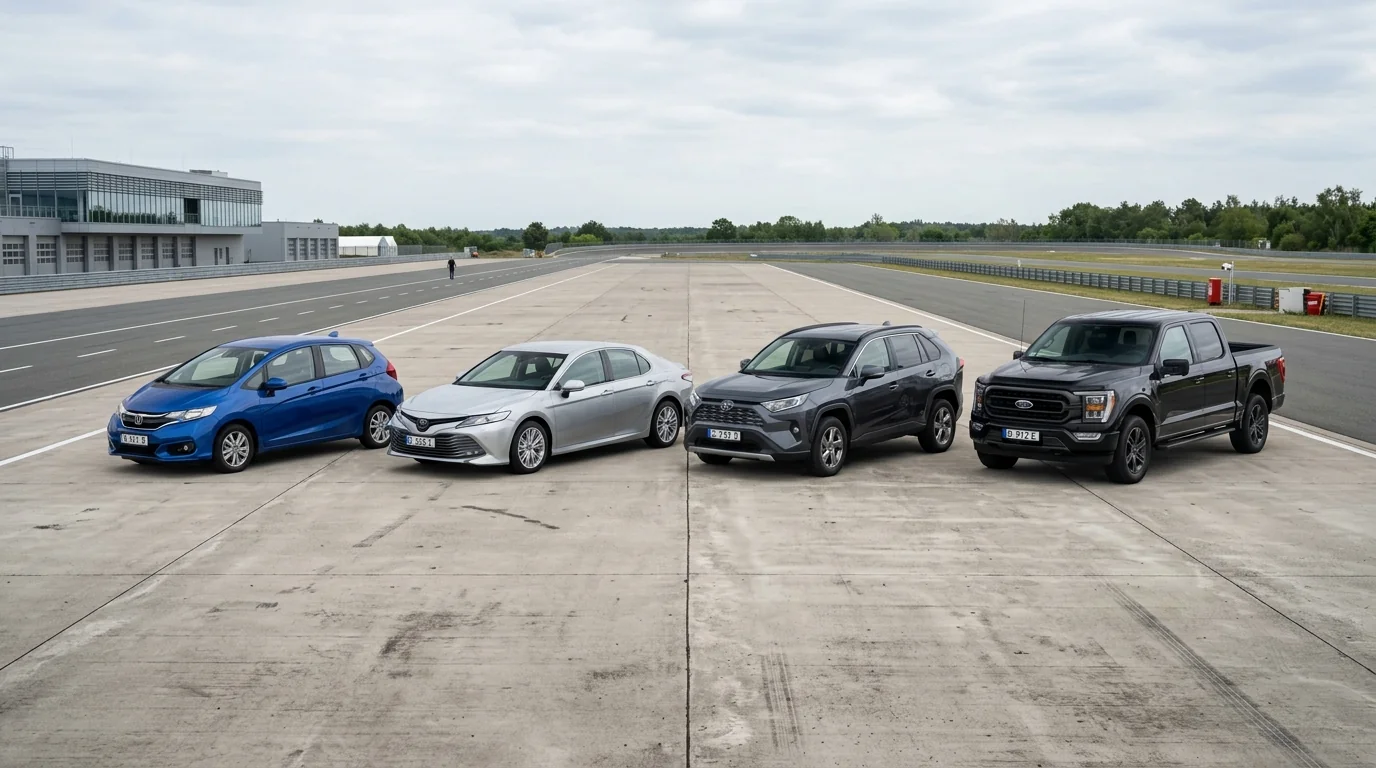
How many tons is a car? As a rough guide, familiar passenger cars can weigh around 1.2 to 2 US short tons, although lighter and heavier examples exist. That corresponds to approximately 1.1 to 1.8 metric tonnes. Treat this as an orientation range, not a measured average for every car on the road.
The answer changes with the vehicle and the meaning of “ton.” A compact sedan, a two-seat roadster, and a large luxury car do not share one standard weight. A US short ton also represents less mass than a metric tonne, so the same car produces different numbers in those units.
For a dependable answer, start with a published weight for the particular model and trim. The examples below show how to translate that figure, compare vehicles fairly, and recognize when a broad average is answering a different question.
Quick Guide to a Car’s Weight in Tons
A car weighing 3,200 pounds is 1.6 US short tons or approximately 1.451 metric tonnes. Divide pounds by 2,000 for US tons, or kilograms by 1,000 for metric tonnes. There is no fixed weight for all cars; model, equipment, and whether passengers are included affect the starting figure.
Which Ton Does the Question Mean?
Three definitions can appear in English-language records. The two most relevant to ordinary car specifications are the US short ton and the metric tonne.
| Unit | Definition | Equivalent pounds |
|---|---|---|
| US short ton | 2,000 lb | 2,000 lb |
| Metric tonne, also called metric ton | 1,000 kg | Approximately 2,204.62 lb |
| Long ton | 2,240 lb | 2,240 lb |
The long ton may appear in older or specialized material. Do not assume every source using British English means long tons: a modern specification may instead use kilograms or metric tonnes.
For a 4,000 lb vehicle, the three results are 2.000 US short tons, approximately 1.814 metric tonnes, and approximately 1.786 long tons. Nothing about the vehicle changes when you switch units.
Writing “2 tons” without identifying the unit leaves a meaningful ambiguity. Two metric tonnes represent approximately 4,409 lb, about 409 lb more than two US short tons. That difference is too large to dismiss as rounding when interpreting a weight figure.
Use the full unit name in a comparison table or document, especially when the information crosses national boundaries.
Published Car Weights Converted Into Tons
Real specifications give a better sense of scale than a single unsupported average. The following US-market examples use manufacturer-published curb weights. Model years and configurations are included because a shared model name does not guarantee a shared weight.
| Vehicle and configuration | Published curb weight | US short tons | Metric tonnes |
|---|---|---|---|
| 2026 Mazda MX-5 Miata soft top, manual | 2,366 lb | 1.183 | 1.073 |
| 2026 Honda Civic Sedan LX | 2,875 lb | 1.438 | 1.304 |
| 2026 Honda Civic Sedan Sport Touring Hybrid | 3,252 lb | 1.626 | 1.475 |
| 2025 Toyota Camry LE, front-wheel drive | 3,450 lb | 1.725 | 1.565 |
| 2025 Toyota Camry LE, all-wheel drive | 3,594 lb | 1.797 | 1.630 |
Source figures come from Mazda USA’s 2026 MX-5 information, Honda’s 2026 Civic Sedan specifications, and Toyota’s 2025 Camry brochure. Converted values are rounded to three decimal places. These examples illustrate selected vehicles rather than the full market.
The roadster sits near the lower end of this group. The compact sedan examples fall between it and the midsize sedan examples. None of these rows supports the idea that every car weighs exactly two tons.
Also notice that the two Camry entries differ despite sharing a model year and trim name. Keep the drivetrain description when using a published value instead of copying only the model name.
Why “Average Car Weight” Needs a Clear Definition
An average car weight figure is only useful when you know which vehicles it includes. A statistic covering all new light-duty vehicles may include pickups, SUVs, and vans alongside sedans and hatchbacks.
The US Environmental Protection Agency’s Automotive Trends reporting separates vehicles into categories including sedan/wagon, car SUV, truck SUV, pickup, and minivan/van. That classification is a reminder to read the scope of a statistic before treating it as a passenger-car figure.
There is another distinction between a simple model average and a sales- or production-weighted average. Imagine a fictional market with two models: a 1.3-tonne car and a 2.1-tonne vehicle.
Giving each model equal importance produces an average of 1.7 tonnes. But if the lighter model accounts for 80% of vehicles and the heavier model for 20%, the weighted result is:
(1.3 × 0.80) + (2.1 × 0.20) = 1.46 metric tonnes
Both calculations are valid descriptions of their chosen samples. They answer different questions.
The period matters too. New vehicles sold in one year are not the same group as every registered vehicle still in use. For your own car, a model-specific specification is more informative than either kind of fleet average.
Convert Pounds to Tons With a Worked Example
For pounds to tons in the US system, use:
US short tons = pounds ÷ 2,000
Suppose a fictional sedan has a published weight of 3,360 lb:
3,360 ÷ 2,000 = 1.68 US short tons
If you need metric tonnes from the same pound value, use the exact relationship of 0.45359237 kg per pound:
3,360 × 0.45359237 ÷ 1,000 ≈ 1.524 metric tonnes
These results are two descriptions of the same starting weight. The larger numerical value in US tons does not mean the car is heavier in an American specification sheet.
For a quick check, every 200 lb represents 0.1 US short ton. A 3,000 lb car is therefore 1.5 US short tons, while a 3,600 lb car is 1.8 US short tons.
Keep the original pound figure in your records. If you later need another unit, convert from that source value rather than from a previously rounded ton figure. A rounded answer can be suitable for discussion while still being unsuitable as the starting point for a more precise calculation.
Convert Kilograms to Tonnes and Compare Common Values
For kilograms to tonnes, the calculation is especially short:
Metric tonnes = kilograms ÷ 1,000
A car listed at 1,580 kg weighs 1.58 metric tonnes. To express that same mass in US short tons, divide kilograms by 907.18474:
1,580 ÷ 907.18474 ≈ 1.742 US short tons
The reference values below are arithmetic examples, not weight limits or category averages.
| Starting mass | Metric tonnes | US short tons |
|---|---|---|
| 1,000 kg | 1.000 | 1.102 |
| 1,250 kg | 1.250 | 1.378 |
| 1,500 kg | 1.500 | 1.653 |
| 1,750 kg | 1.750 | 1.929 |
| 2,000 kg | 2.000 | 2.205 |
| 2,500 kg | 2.500 | 2.756 |
This table also shows why a threshold such as “under two tons” needs a unit. A 1,900 kg car is below two metric tonnes but above two US short tons. It would fit one description and fail the other without any contradiction.
When filling in a form, follow its specified unit rather than assuming that “ton” matches the terminology used in the vehicle brochure.
Why Size, Equipment, and Powertrain Change the Answer
Body size is a useful clue, but it does not determine mass on its own. The finished vehicle includes its structure, drivetrain, seating, interior equipment, and other components. Two cars with similar exterior dimensions can therefore have different weights.
The Civic examples illustrate variation within one model family: the listed LX and Sport Touring Hybrid differ by 377 lb, equivalent to 0.1885 US short ton. This is a comparison of complete configurations, so the difference should not be attributed entirely to one component such as a battery.
Likewise, Toyota’s listed front-wheel-drive and all-wheel-drive Camry LE examples differ by 144 lb. That is a configuration-specific comparison, not a universal allowance to add to every all-wheel-drive car.
Electric cars also need model-specific treatment. A battery is part of the vehicle’s mass, but the whole-car result depends on its size, construction, and equipment. “Electric” is not a fixed weight category, and it does not prove that every electric car is heavier than every gasoline car.
When comparing two powertrain versions, use the same body style and similar equipment where possible. If you cannot match them closely, describe the comparison as one between complete trims rather than claiming to have isolated the weight of a technology.
Does the Number Include People and Luggage?
The examples in this article use curb-weight specifications. To understand what a particular source includes, read its definition and footnotes. A brochure figure is not automatically the loaded weight of a car departing for a holiday.
For a simple illustration, assume a fictional car’s baseline mass is 1,520 kg and explicitly excludes occupants and luggage. Adding 230 kg of people and bags produces a total of 1,750 kg, or 1.75 metric tonnes.
The added load alone is 0.23 metric tonne. If a form or service asks for the vehicle’s actual loaded mass, submitting the original 1.52-tonne figure would omit that load.
Use care with other labels. A maximum permitted mass describes a limit, and a dry-weight value may exclude operating fluids. Neither should be substituted for a curb specification without understanding the source’s definitions.
For ordinary model comparisons, keep the weight basis consistent. For a task requiring current actual mass, use evidence that represents the vehicle in the relevant condition. Converting an inappropriate starting figure perfectly still leaves an inappropriate answer.
Use Car Weight in Tons for the Right Purpose
A rounded figure is helpful for understanding scale or explaining a vehicle specification. “About 1.7 US short tons” may communicate more readily than a long pound value in casual discussion.
For transport arrangements, give the operator the specific car, configuration, and any relevant load information. Confirm which weight definition and unit the service requests. Avoid treating a general average as a substitute for the vehicle details needed to plan the job.
For an equipment or access limit, inspect the exact unit and the applicable instructions. A car described informally as “two tons” may fall on different sides of a numerical threshold depending on how the phrase was rounded and which ton was intended.
Towing capacity is a separate specification. Knowing a car’s own mass does not tell you the trailer load it is approved to tow. Similarly, a vehicle’s total mass alone does not specify the load carried by one axle or one lifting point.
Use the ton conversion to express a known mass clearly. Any decision involving a particular rating still needs the relevant manufacturer or operator requirements, including what the rating applies to.
Questions Readers Ask About Car Weight
How many tons is a car that weighs 3,500 pounds?
A 3,500 lb car weighs 1.75 US short tons. In metric units, it is approximately 1,587.57 kg, or 1.588 metric tonnes. Both answers are correct conversions. State which unit you used, especially when sharing the number with someone whose source information is in kilograms rather than pounds.
Is a normal car one ton or two tons?
There is no single “normal” value. Some smaller passenger cars are closer to one metric tonne, while larger or more heavily equipped vehicles may approach or exceed two. The manufacturer examples above show substantial differences even among familiar car types. An individual model specification is the best starting point for a precise answer.
Can a car weigh less than one metric tonne?
Yes, a car can fall below 1,000 kg, although you should verify a specific model rather than assume all small-looking cars do. One metric tonne is simply a mass threshold, not a minimum that defines a car. Also distinguish a below-one-tonne curb figure from its mass after occupants and luggage are added.
Does an SUV count when calculating average car weight?
That depends on the dataset. Everyday speech may use “car” to include SUVs, while statistical reports can separate SUVs into several categories. Check the population behind the average before comparing it with sedans or hatchbacks. Including larger vehicle types can change the result even when the individual sedan models have not changed.
Are tons and tonnes interchangeable in a car listing?
Only if the listing explicitly uses “ton” to mean metric ton. A tonne is 1,000 kg, but an unqualified ton may mean a US short ton or a long ton. When the unit is unclear, look for the accompanying pound or kilogram figure, or ask the source to identify its convention.
Why does a car listing show a range instead of one weight?
A range can cover multiple trims, powertrains, or equipment combinations. Its lower endpoint may not represent the particular car being discussed. Check which configurations the range includes and whether the figure is a minimum, a maximum, or a curb specification. Do not select an endpoint solely because it gives a more convenient result.
Start With the Car, Then Choose the Unit
For a useful answer to this question, identify the vehicle and weight basis before converting. Divide pounds by 2,000 for US short tons or kilograms by 1,000 for metric tonnes. Keep the full unit label with the result, and use broad averages only to understand scale, not to replace the specification for an individual car.