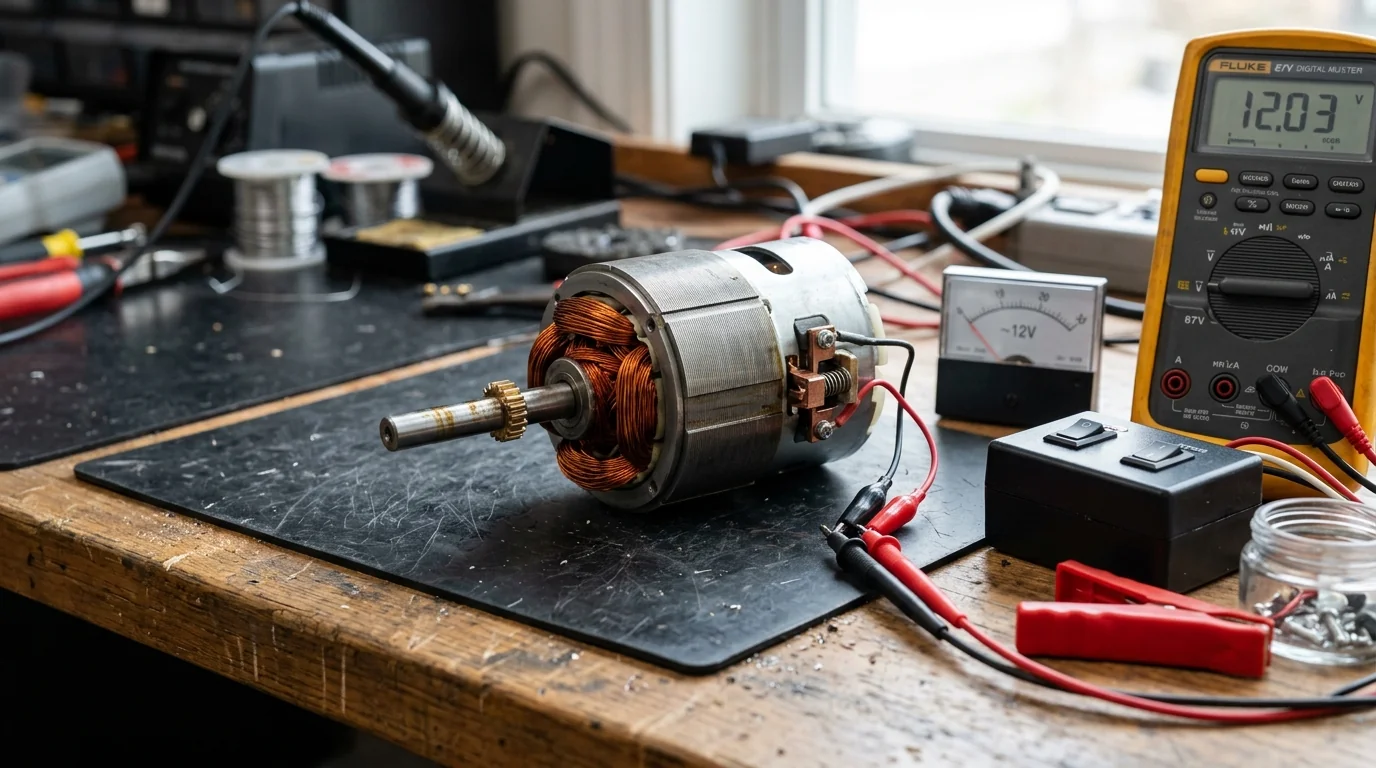
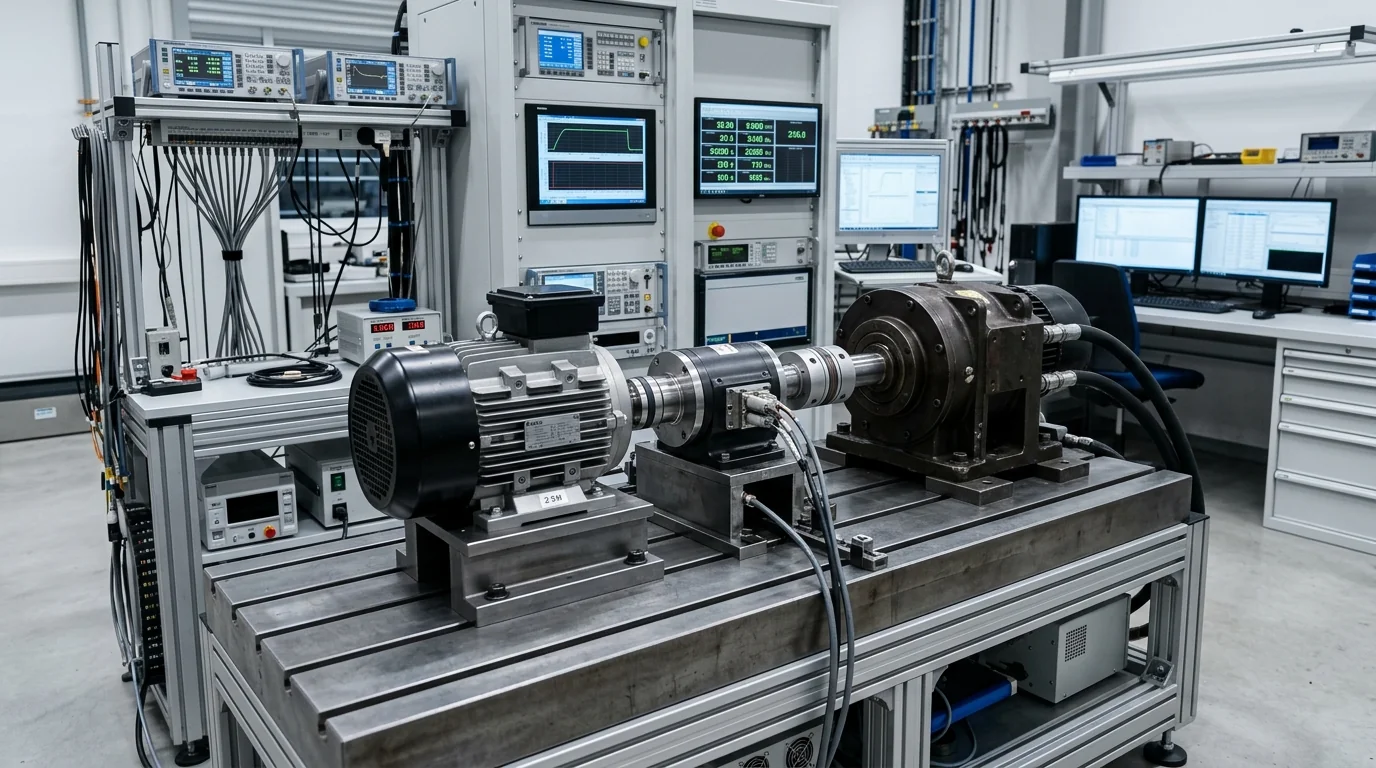
You cannot convert 2000 watts to RPMs as a fixed unit conversion. Watts measure power, while RPM measures rotational speed. To calculate shaft speed from 2,000 W of mechanical power, you also need the torque delivered at that same shaft and operating condition.
For example, 2,000 W delivered at 10 newton-meters corresponds to approximately 1,910 RPM. At 5 newton-meters, the same mechanical power corresponds to approximately 3,820 RPM. Both answers can be mathematically correct because they describe different torque-and-speed combinations.
This distinction matters when reading motor listings, choosing a drive system, or checking a calculation that promises to turn wattage directly into speed. A “2 kW” label alone does not reveal rated RPM, unloaded speed, or the speed after a gearbox. Below, you will find the missing information to look for, the correct equations, and worked examples that separate calculated operating points from a motor’s actual capabilities.
Quick Answer: There Is No Single RPM Value
For a rotating shaft, RPM = power in watts × 60 ÷ (2π × torque in N·m). At 2,000 W of mechanical output, this becomes RPM ≈ 19,098.6 ÷ torque. The power and torque must describe the same operating point. Electrical input wattage alone does not establish shaft speed.
Why Watts and RPM Need a Third Quantity
Power describes how quickly energy is transferred. Rotational speed describes how quickly a shaft turns. Torque connects them by describing the turning effort transmitted through that shaft.
A drive can transmit a given amount of mechanical power through relatively high torque at low speed or relatively low torque at high speed. Neither arrangement violates the power rating.
The basic relationship is:
P = T × ω
Here, P is shaft power in watts, T is torque in newton-meters, and ω is angular velocity in radians per second. One complete rotation is 2π radians, so angular velocity can be converted into revolutions per minute.
There are three quantities in this relationship. Knowing one leaves two unknowns. Knowing power and torque lets you calculate speed; knowing torque and RPM lets you calculate power. A watts to RPM tool must therefore request another relevant input or clearly state an assumption.
Calculate 2000 Watts to RPMs When Torque Is Known
Substitute the RPM expression for angular velocity into the power relationship:
P = T × 2π × RPM ÷ 60
Rearranging gives:
RPM = P × 60 ÷ (2π × T)
For P = 2,000 W:
RPM = 2,000 × 60 ÷ (2π × T)
RPM ≈ 19,098.6 ÷ T
The torque value must be in N·m for this numerical expression. Do not insert a value in pound-feet, pound-inches, or newton-centimeters without converting it first.
Worked case: 10 N·m of shaft torque
Assume a fictional motor is delivering 2,000 W and 10 N·m at the same shaft:
RPM ≈ 19,098.6 ÷ 10 ≈ 1,910
To check the answer, convert the unrounded speed back to angular velocity. Approximately 1,909.86 RPM corresponds to 200 radians per second. Multiplying 200 rad/s by 10 N·m returns 2,000 W.
Use the kilowatt version carefully
The same relationship is often written as:
RPM ≈ 9,549.3 × power in kW ÷ torque in N·m
For a 2 kW motor operating at 10 N·m, this also gives about 1,910 RPM. The factor is different because the input is now kilowatts. Entering 2,000 into the kilowatt version would overstate the result by a factor of 1,000.
Several Torque and Speed Pairs Can Represent 2 kW
The following table holds mechanical shaft power at 2,000 W and varies torque. Each row is a separate hypothetical operating point.
| Shaft torque | Calculated rotational speed |
|---|---|
| 2 N·m | 9,549 RPM |
| 4 N·m | 4,775 RPM |
| 5 N·m | 3,820 RPM |
| 8 N·m | 2,387 RPM |
| 10 N·m | 1,910 RPM |
| 20 N·m | 955 RPM |
This is a constant-power relationship, not a performance map for every motor rated at 2 kW. A particular machine may be unable to operate continuously at some or all of these combinations.
For example, a motor designed for a moderate rated speed cannot be assumed capable of nearly 10,000 RPM simply because the arithmetic produces that result at 2 N·m. Its speed limit, torque capability, controller, and thermal conditions still apply.
Use the table to understand the relationship between quantities. To establish whether a motor can deliver a particular row, consult its published operating range or speed-torque curve.
Find Required Torque When Your Target RPM Is Known
Sometimes the useful question is the reverse: how much torque represents 2 kW at the speed your machine requires?
Rearrange the relationship again:
Torque in N·m = 2,000 × 60 ÷ (2π × RPM)
At a target of 3,000 RPM:
Torque ≈ 19,098.6 ÷ 3,000 ≈ 6.37 N·m
At 1,500 RPM, the corresponding torque is approximately 12.73 N·m. Halving speed while keeping delivered power unchanged requires twice the torque.
This gives you a specific operating requirement to compare with motor data. A listing that says only “2,000 W maximum” does not confirm continuous delivery of 6.37 N·m at 3,000 RPM.
Also distinguish maintaining speed from accelerating a load. The requirement during acceleration can include additional torque to increase the speed of rotating components. A steady-running calculation alone does not describe the complete start-stop duty of a machine.
Record the target speed, continuous load requirement, and operating pattern before treating the wattage match as sufficient for selection.
Match Power and Torque at the Same Operating Point
Motor specifications often list several torque and speed values. Pairing the wrong ones creates a calculation that looks valid but describes no real operating condition.
Rated speed and rated torque belong to the stated rated-output condition. Maximum torque, starting torque, and stall torque may refer to different conditions and durations.
Do not divide rated output power by stall torque and label the answer “rated RPM.” At stall, the shaft is stationary. Mechanical output power at that shaft is therefore zero even though the motor may produce torque and draw electrical current.
Likewise, no-load speed describes operation with little or no external mechanical load. It should not be combined with an unrelated maximum torque figure to claim an output rating.
Think of a motor’s data as a set of connected operating points. A curve or performance table shows which speed and torque values can occur together. A headline list of separate maximum figures does not establish that they are simultaneous.
If power and torque are measured during changing conditions, use synchronized readings or an appropriate steady interval. Taking peak power from one moment and torque from another can produce a speed that never occurred.
Check Whether 2000 W Means Input or Output
The rotational-power equation describes mechanical power at the shaft being assessed. A measurement at a battery, wall outlet, or controller input includes power that may be lost before reaching that shaft.
If 2,000 W is electrical input and motor efficiency is known at the relevant operating point, first determine the mechanical output. For an illustrative 90% efficiency, the shaft output would be 1,800 W.
Using that output with a simultaneous shaft torque of 9 N·m gives:
RPM = 1,800 × 60 ÷ (2π × 9) ≈ 1,910 RPM
Using the full electrical input instead would give approximately 2,122 RPM, which would misrepresent this example’s shaft conditions.
The assumed efficiency is specific to the example. Do not borrow a convenient percentage from an unrelated motor. Also check whether a supplied efficiency figure covers the motor alone or a larger assembly containing a controller or gearbox.
Even after accounting for motor efficiency, torque or other appropriate speed information is still necessary. Knowing the mechanical output is 1,800 W does not uniquely determine its RPM either.
Motor Type Provides Other Ways to Determine Speed
If torque is unavailable, the motor’s design and documentation may provide the required speed information directly.
AC induction motors
For an AC motor’s rotating magnetic field, synchronous speed is:
Synchronous RPM = 120 × frequency in Hz ÷ number of poles
A four-pole motor supplied at 50 Hz has a synchronous field speed of 1,500 RPM. At 60 Hz, the corresponding speed is 1,800 RPM. In normal motoring operation, an induction motor’s rotor runs below synchronous speed; the difference is called slip.
Pole count and supply frequency explain this relationship. A 2 kW label does not determine either quantity. Use the rated speed for the specified supply and load rather than assuming synchronous speed is the actual shaft speed.
Brushless DC and other electronically controlled motors
Some motor data includes a speed constant expressed in RPM per volt. This relates speed to generated back electromotive force and can help estimate ideal no-load speed under suitable assumptions.
It is not a guaranteed loaded-speed formula based only on battery voltage. Winding voltage, electrical losses, controller behavior, and load affect the operating result. Use the manufacturer’s data for the particular motor and drive combination.
Distinguish Motor Speed From Gearbox Output
A motor and its driven shaft can rotate at different speeds when a gearbox sits between them. Identify the shaft whose RPM you need before entering torque or power.
Suppose a fictional motor provides 2 kW at 3,000 RPM and drives a gearbox with a 5:1 reduction ratio. The nominal output speed is:
3,000 ÷ 5 = 600 RPM
The motor torque is approximately 6.37 N·m. An ideal lossless gearbox would multiply that torque by five. If gearbox efficiency at this point were 92%, output power would instead be 1,840 W and output torque approximately 29.28 N·m.
Checking those output values together at 600 RPM returns approximately 1,840 W. Combining gearbox-output torque with the motor’s pre-gearbox power would mix two measurement locations.
Gearing also does not create additional power. It trades rotational speed for torque, with real losses reducing the transmitted output. Check the gearbox’s permissible input speed and output torque as well as its ratio before assuming a calculated combination is usable.
A Short Checklist for a 2 kW Motor Listing
Before accepting a speed claim or buying a motor for a specific task, look for:
- Whether 2 kW describes electrical input, continuous output, or a brief peak.
- Rated RPM and rated torque under matching conditions.
- Supply requirements and the compatible controller or drive.
- Published speed and torque limits, including duty restrictions.
- Whether listed speed refers to the motor shaft or a geared output.
If the seller provides only wattage, request the technical sheet rather than assigning a guessed RPM. A real speed measurement using appropriate equipment can answer how fast a shaft is turning, but it does not independently establish the power being delivered.
For testing, keep within the equipment’s documented operating limits. Do not stall a motor or remove protective arrangements merely to obtain an extra figure for a calculation.
Questions About Watts, Torque, and Rotational Speed
How many RPM does a 2000 watt motor produce?
There is no universal value. Its rated speed depends on its design and operating conditions. If it delivers 2,000 W mechanically at 8 N·m, the relationship gives approximately 2,387 RPM. Use a documented torque-speed pair or the stated rated RPM to answer for a particular motor.
Can I calculate RPM from watts and voltage?
Not uniquely. Watts and voltage do not specify the motor’s torque or speed characteristic. A suitable motor speed constant can support a no-load estimate, while rated data or a performance curve describes more specific operation. Voltage compatibility alone does not establish how fast a motor will run under load.
Does doubling watts double RPM?
Only in a comparison where delivered mechanical torque remains fixed and the motor can operate at both points. The equation then makes speed proportional to power. Real changes in supply or controller settings can also change torque, losses, and limits, so doubling an input wattage figure does not guarantee double shaft speed.
Is 2000 W enough for 3000 RPM?
Power alone cannot establish whether it is enough for the load. At 3,000 RPM, 2,000 W of shaft output corresponds to approximately 6.37 N·m. Compare that with the required torque at that speed, including the operating duty. A lightly loaded shaft and a heavily loaded shaft can require very different power at identical RPM.
Why does the formula fail when torque is zero?
Dividing by zero cannot produce a valid speed. A no-load motor can spin while delivering almost no useful external shaft power, with electrical input covering internal losses. Do not combine zero external torque with rated full-load output. Those values describe incompatible conditions rather than an infinitely fast motor.
Can 2000 watts tell me a scooter’s top speed?
No. Shaft speed would first require the relevant motor data, and road speed also involves the drivetrain and wheel dimensions. Whether the vehicle can reach a calculated speed depends on available output, resistance, load, and controls. A motor’s wattage is therefore insufficient to establish a dependable top-speed figure.
Use Torque or Rated Speed to Complete the Answer
For 2000 watts to RPMs, begin by identifying what the power rating describes. With 2,000 W of actual shaft output and matching torque in N·m, use RPM ≈ 19,098.6 ÷ torque. Otherwise, obtain the rated speed or appropriate motor performance data. Keep every value tied to the same shaft and operating condition.